1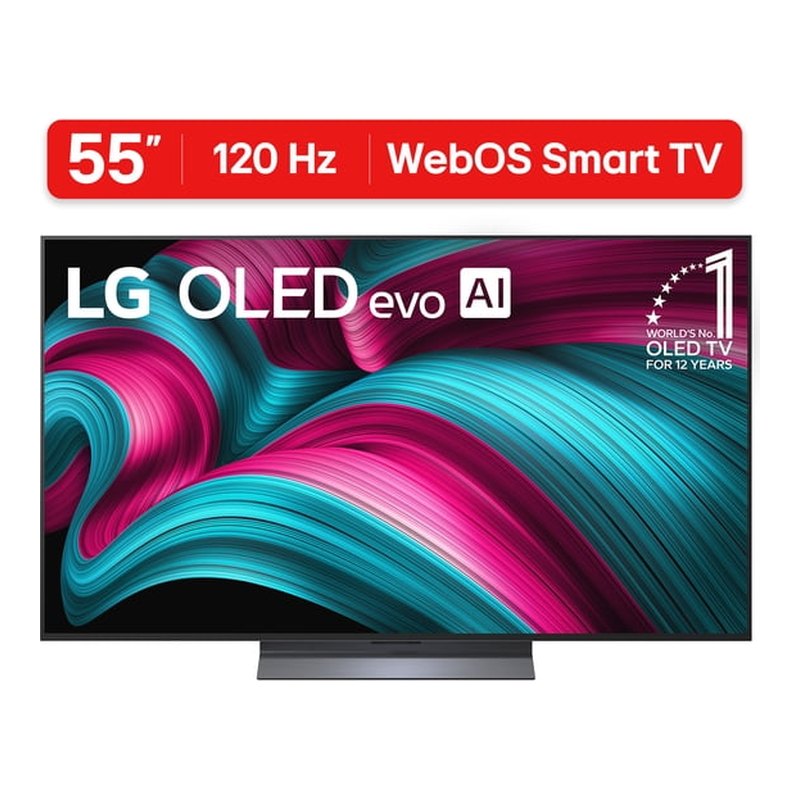
Best overallLG C5 OLED55C5PUA
Performance9.7
Value9.3
Reliability9.2
Panel: OLED evoRefresh rate: 144HzHDR: Dolby Vision, HDR10, HLGSmart platform: webOS 25HDMI 2.1: 4 ports
The LG C5 is the OLED that other 55-inch TVs get measured against, and the 2025 model is still the smartest buy now that the newer C6 sells for several hundred dollars more. The OLED evo panel turns off individual pixels for true black, so movies and dark shows look deep and cinematic. The Alpha 9 Gen8 processor upscales cable, YouTube and older streaming content cleanly to 4K and keeps skin tones natural.
For gamers this is one of the best TVs you can buy. All four HDMI ports are HDMI 2.1 with 144Hz, VRR, G-Sync and FreeSync Premium, and input lag is low enough that you will not notice it on a PS5, Xbox Series X or gaming PC. webOS 25 is quick and carries every major US app, including Netflix, Max, Peacock, YouTube TV and Disney+. Amazon buyers mostly praise the picture, viewing angles and slim design. The main drawback is brightness: in a room full of afternoon sun, a good Mini LED gets noticeably brighter.
Pros
- Perfect blacks and infinite contrast
- Four HDMI 2.1 ports up to 144Hz
- Dolby Vision and Dolby Atmos
- Very low input lag for gaming
Cons
- No HDR10+ support
- Not as bright as a top Mini LED in a sunny room
Ideal for: Anyone who wants one TV that does everything well, from Netflix in a dark room to PS5 gaming.
2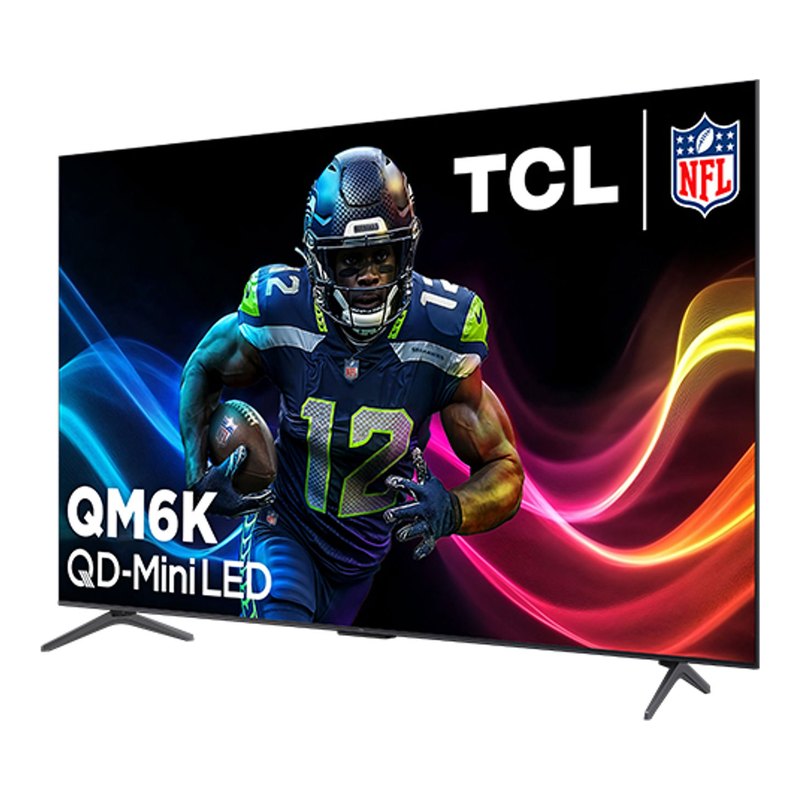
Best valueTCL QM6K 55QM6K
Performance9.2
Value9.6
Reliability8.7
Panel: QD-Mini LEDRefresh rate: 144HzHDR: Dolby Vision IQ, HDR10+, HLGSmart platform: Google TVHDMI 2.1: 2 ports
The TCL QM6K is the TV that makes most sub-$700 sets look overpriced. It uses a quantum dot Mini LED backlight with hundreds of local dimming zones, so it gets bright enough for HDR movies and daytime sports in a sunny living room. Contrast is far better than a regular LED TV, and because it supports both Dolby Vision and HDR10+, every streaming service gets the best version of its HDR content.
Gamers get a native 144Hz panel, VRR and auto low latency mode on two HDMI 2.1 ports, which covers a console and a soundbar with eARC. Google TV is easy to use, has every app you need and doubles as a Chromecast target for your phone. Amazon reviewers regularly call it the best TV for the money and mention how bright it looks out of the box. The tradeoffs are mild halos around subtitles on dark scenes and colors that wash out when you sit off to the side. A soundbar is recommended.
Pros
- Bright Mini LED picture for the money
- Native 144Hz with VRR
- Supports both Dolby Vision and HDR10+
- Google TV with built-in Chromecast
Cons
- Some blooming around bright objects
- Built-in speakers are thin
- Viewing angles are narrow
Ideal for: Budget-minded buyers and gamers who want real HDR punch without paying OLED prices.
3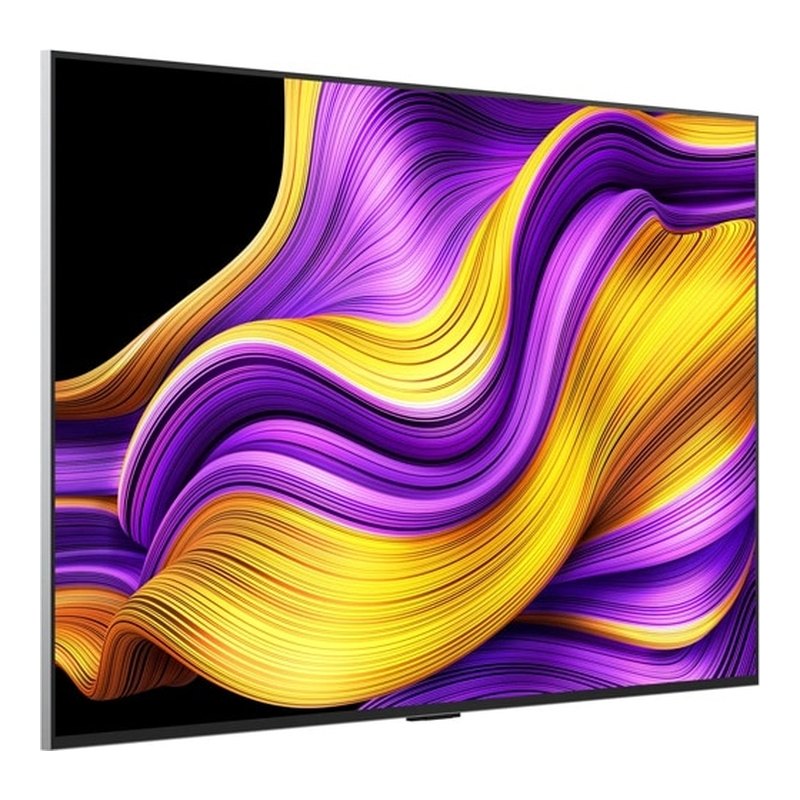
Best premiumLG G5 OLED55G5WUA
Performance9.6
Value8.9
Reliability9.1
Panel: OLED evo with MLA+Refresh rate: 165HzHDR: Dolby Vision, HDR10, HLGSmart platform: webOS 25HDMI 2.1: 4 ports
The LG G5 is the premium version of the C5, and the difference shows up most in brightness. Its four-layer tandem OLED panel with micro lens array pushes highlights roughly twice as bright as the C5, which makes HDR movies pop and keeps the picture vivid in a room with windows. The matte anti-glare filter cuts reflections better than glossy OLED screens, according to buyer feedback, while black levels stay perfect.
The G5 is built to hang on the wall. The Gallery design is ultra thin and mounts nearly flush, so it looks like a framed picture. Gamers get four HDMI 2.1 ports and up to 165Hz with a PC, plus VRR and Dolby Vision gaming. Buyers on Amazon praise the picture as reference quality and say the extra brightness is obvious next to older OLEDs. The catch is price: you pay a big premium over the C5, and if you watch mostly at night in a dim room, the C5 gets you most of the way there.
Pros
- Much brighter than any other OLED
- Excellent anti-glare screen
- Up to 165Hz for PC gaming
- Gallery design sits flush on the wall
Cons
- Costs about $700 more than the C5
- Designed for wall mounting, the stand look is less elegant
Ideal for: Movie fans who want OLED contrast without compromise, even in a bright room.
4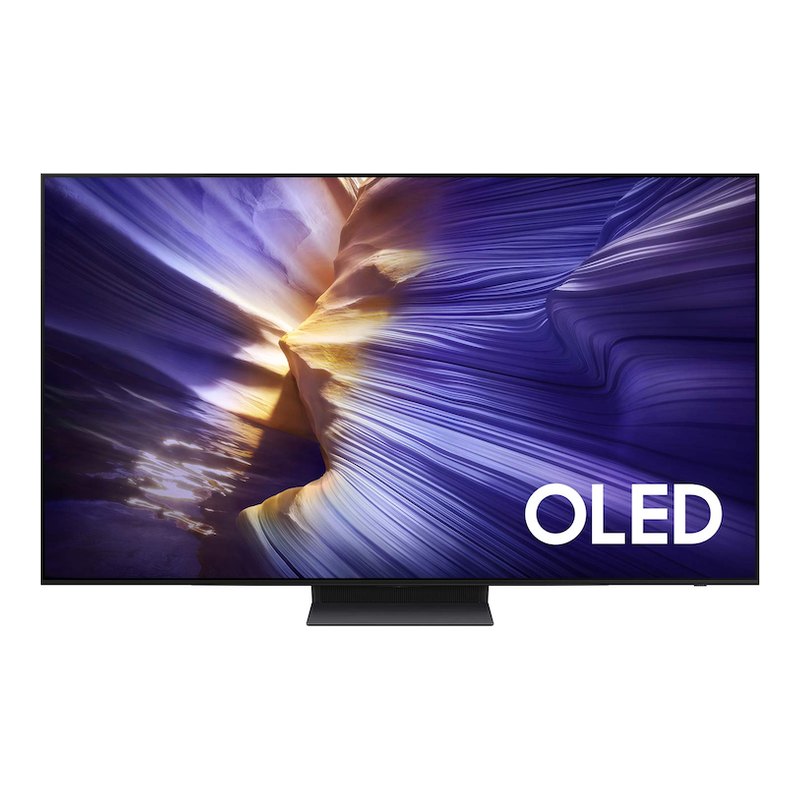
Samsung S90F QN55S90FAFXZA
Performance9.2
Value9.1
Reliability9.0
Panel: QD-OLEDRefresh rate: 144HzHDR: HDR10+, HDR10, HLGSmart platform: TizenHDMI 2.1: 4 ports
The Samsung S90F is the main rival to the LG C5, and at 55 inches it uses a QD-OLED panel that produces some of the richest colors available. Reds and greens look especially saturated, and peak brightness is a touch higher than the C5 in many scenes. Blacks are perfect, as with any OLED, and the NQ4 AI Gen2 processor handles upscaling and motion well for sports.
Gamers get four HDMI 2.1 ports at up to 144Hz with VRR and FreeSync Premium Pro, plus the Samsung Gaming Hub for cloud games without a console. Tizen is fast and includes Samsung TV Plus with hundreds of free channels. The big omission is Dolby Vision: Samsung supports HDR10+ instead, so Netflix and Disney+ content plays in standard HDR10. Amazon buyers rave about color and gaming performance, while a few mention that the glossy screen reflects lamps more than the matte LG G5. At similar prices, choose between this and the C5 based on your preferred smart system.
Pros
- QD-OLED gives very vivid colors
- Four HDMI 2.1 ports at 144Hz
- Bright for an OLED
- Samsung TV Plus free channels built in
Cons
- No Dolby Vision
- Glossy screen shows reflections in bright rooms
Ideal for: Samsung phone and appliance owners who want an OLED that fits their SmartThings home.
5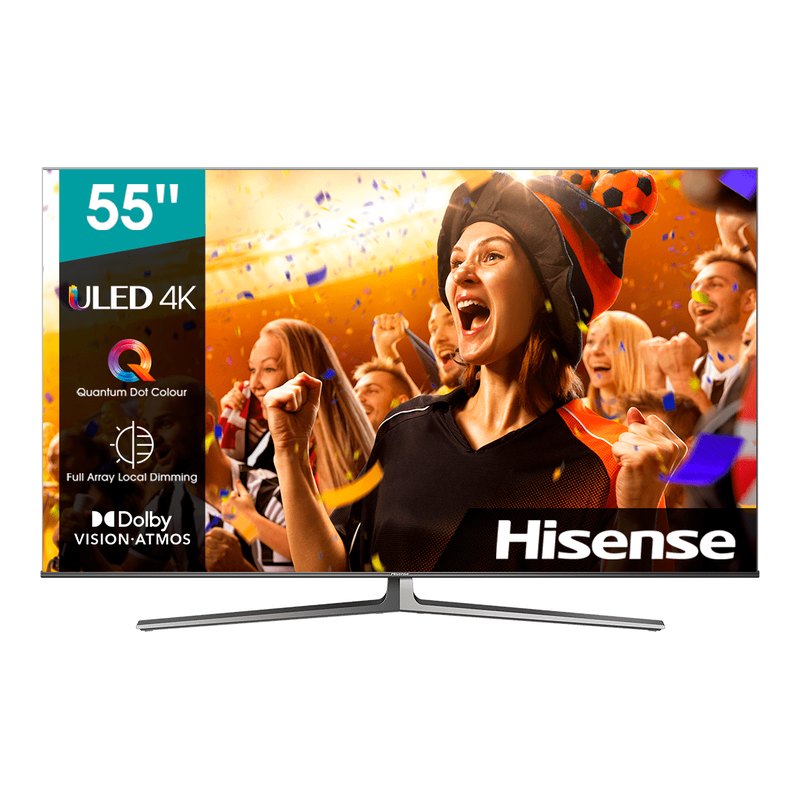
Hisense U8 55U8QG
Performance9.0
Value9.3
Reliability8.8
Panel: Mini LED ProRefresh rate: 165HzHDR: Dolby Vision IQ, HDR10+, HLGSmart platform: Google TVHDMI 2.1: 2 ports
The Hisense U8 is built for brightness. Its Mini LED Pro backlight reaches several thousand nits in HDR highlights, so it stays punchy in a living room full of daylight, where most OLEDs look dim. Thanks to more than a thousand dimming zones, contrast is strong for an LCD, and the wide color gamut gives sports and animation a vivid look. Both Dolby Vision IQ and HDR10+ are supported.
The 2025 U8 runs Google TV, so you get every major app, Google Assistant and Chromecast built in. Gaming specs are excellent for the price: a native 165Hz panel, VRR, FreeSync Premium Pro and ALLM, though only two HDMI ports are full HDMI 2.1. The built-in 2.1.2 speaker system is better than average. Amazon reviewers often say it rivals TVs costing twice as much in a bright room. In a fully dark home theater you will notice some halos around bright objects, and an OLED still wins on pure black levels and viewing angles.
Pros
- Very high peak brightness
- Strong local dimming for a Mini LED
- Up to 165Hz for gaming
- Both Dolby Vision and HDR10+
Cons
- Blooming in very dark scenes
- Only two HDMI 2.1 ports
Ideal for: Families with a bright living room who watch a lot of daytime sports.
6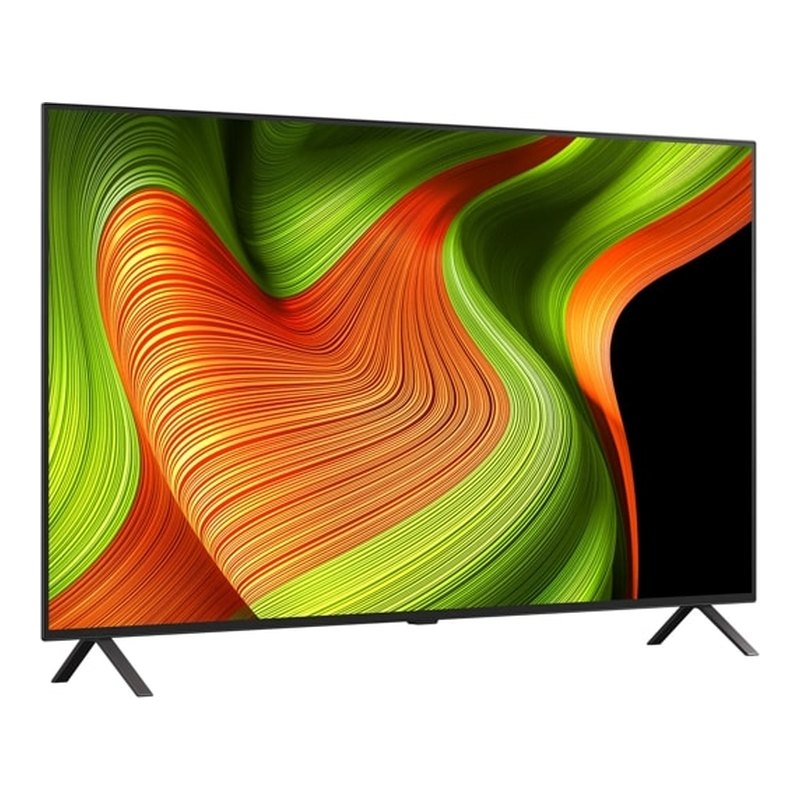
LG B5 OLED55B5PUA
Performance8.9
Value9.0
Reliability8.7
Panel: OLEDRefresh rate: 120HzHDR: Dolby Vision, HDR10, HLGSmart platform: webOS 25HDMI 2.1: 2 ports
The LG B5 brings real OLED picture quality under $800, which makes it one of the most popular step-up TVs on Amazon. You get the same perfect blacks, wide viewing angles and smooth motion as the C5, so movies and dark streaming shows look excellent in the evening. The difference shows in a bright room: without the evo panel, the B5 is noticeably dimmer, and HDR highlights have less punch.
The Alpha 8 processor is a step down but still upscales HD sources cleanly. Gamers get 120Hz, VRR, G-Sync compatibility and ALLM, though only two of the four HDMI ports are HDMI 2.1. If you have one console and a soundbar on eARC, that is enough. webOS 25 is identical to the more expensive models and includes every major US streaming app. Buyers frequently say the contrast blew them away for the price. For a living room that you mostly use at night, this is the smartest OLED purchase of the year.
Pros
- OLED contrast at a midrange price
- 120Hz with VRR and G-Sync
- Same webOS as pricier LG models
Cons
- Dimmer than the C5
- Only two HDMI 2.1 ports
- Simpler processor
Ideal for: Movie watchers who want OLED blacks without stretching to C5 money.
7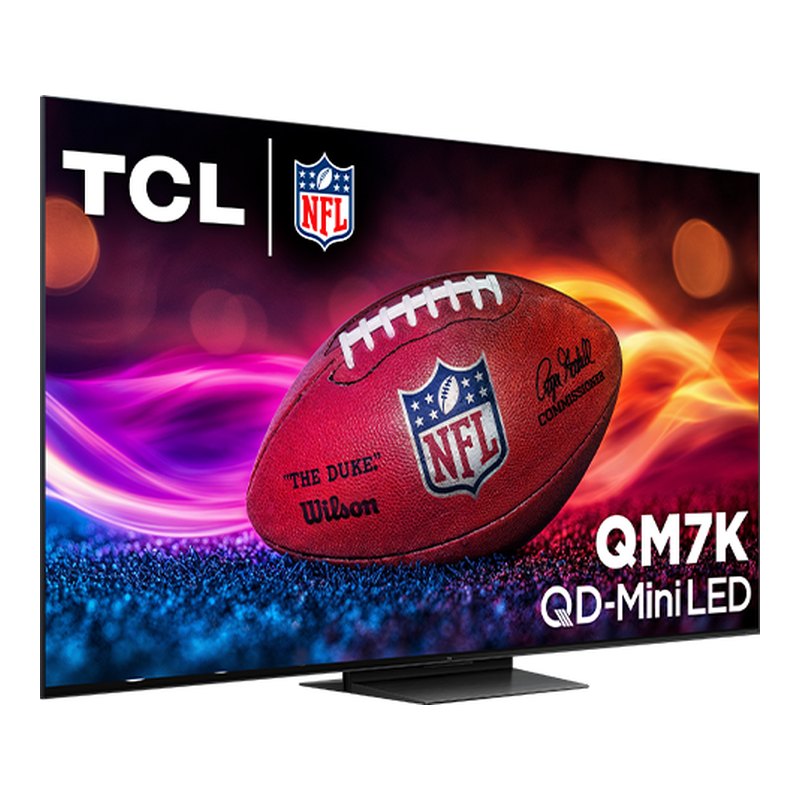
TCL QM7K 55QM7K
Performance8.8
Value9.2
Reliability8.6
Panel: QD-Mini LEDRefresh rate: 144HzHDR: Dolby Vision IQ, HDR10+, HLGSmart platform: Google TVHDMI 2.1: 2 ports
The TCL QM7K sits one step above the QM6K and fixes most of its weak points. It has far more local dimming zones and a brighter backlight, which means tighter control of halos and stronger HDR highlights. The anti-reflection screen also handles lamps and windows better, so it is a good fit for open-plan living spaces where you cannot fully darken the room.
Like its little brother, it runs Google TV with Chromecast built in and supports both Dolby Vision IQ and HDR10+. Gamers get native 144Hz with VRR and Game Accelerator up to 288Hz at lower resolution on PC. The audio system is tuned by Bang and Olufsen and sounds fuller than most TVs in this price range, although a soundbar is still a worthwhile upgrade. Amazon reviews highlight the brightness and value compared with Samsung and Sony sets of the same size. If the QM6K fits your budget, it is the better deal, but the QM7K is a real upgrade.
Pros
- More dimming zones than the QM6K
- High HDR brightness
- Anti-reflective screen
- Bang and Olufsen tuned audio
Cons
- Costs about $200 more than the QM6K
- Some blooming on dark backgrounds
Ideal for: Buyers who want a premium-feeling Mini LED without paying for an OLED.
8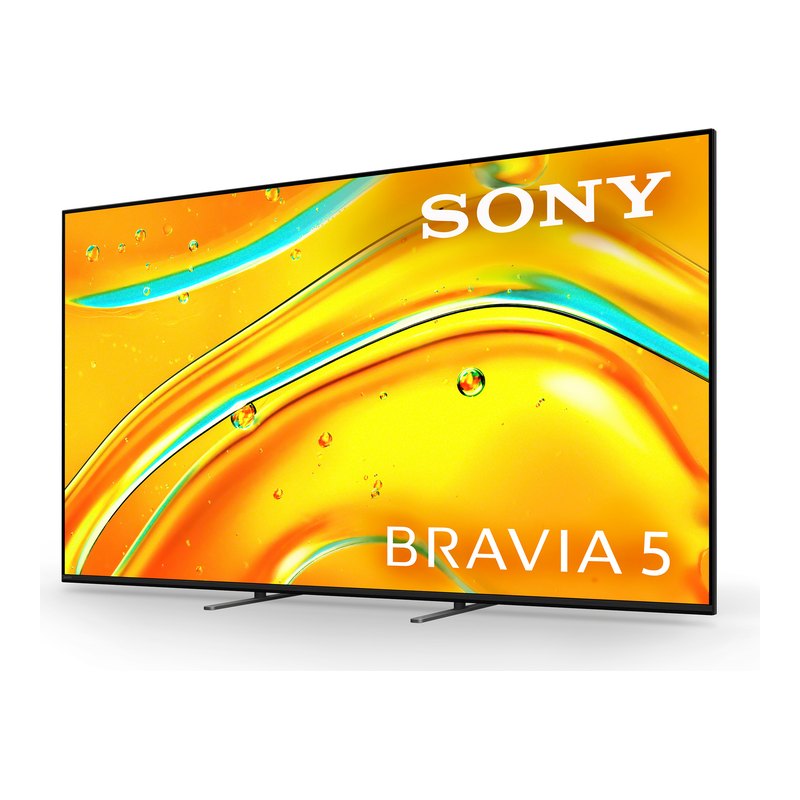
Sony Bravia 5 K-55XR50
Performance8.6
Value8.6
Reliability8.4
Panel: Mini LEDRefresh rate: 120HzHDR: Dolby Vision, HDR10, HLGSmart platform: Google TVHDMI 2.1: 2 ports
The Sony Bravia 5 brings Mini LED to a more affordable Sony, and its strength is processing. The XR processor handles fast motion in football and basketball better than most budget sets, with less judder and fewer artifacts. Colors look natural rather than oversaturated, and upscaling of cable and HD streaming is among the best in this price range. The Mini LED backlight provides good brightness and solid contrast.
PlayStation owners get Auto HDR Tone Mapping and Auto Genre Picture Mode, which set the TV up automatically for games and movies. Google TV covers all major apps, and Sony includes Sony Pictures Core with free movie credits. Gaming tops out at 120Hz with VRR on two HDMI 2.1 ports. Amazon buyers mention the clean picture and good built-in sound. The downside is value: TCL and Hisense offer brighter screens for less, and the Bravia 5 lacks HDR10+. You are paying for Sony's processing and a more natural image.
Pros
- Excellent motion handling for sports
- Natural, accurate colors
- PS5 Perfect for PlayStation features
- Google TV with Chromecast
Cons
- Only 120Hz
- Pricier than TCL and Hisense rivals
- No HDR10+
Ideal for: Sports fans and PS5 owners who value smooth motion and natural colors.
9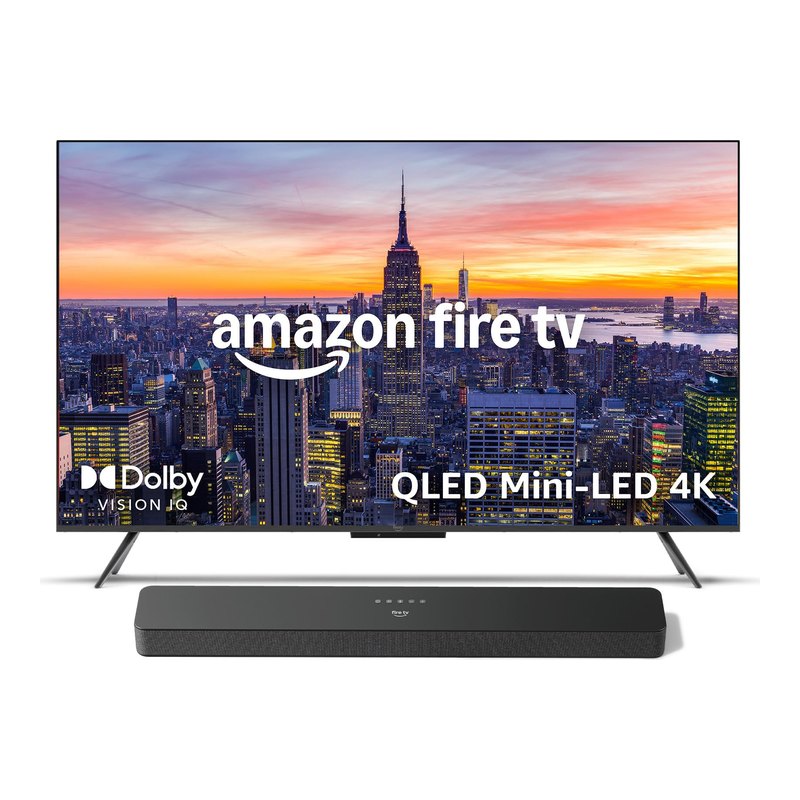
Amazon Fire TV 55-inch Omni Mini-LED Series
Performance8.3
Value8.8
Reliability8.1
Panel: QLED Mini LEDRefresh rate: 60HzHDR: Dolby Vision IQ, HDR10+, HLGSmart platform: Fire TVHDMI 2.1: 1 port (eARC)
Amazon's own Omni Mini-LED is aimed at households already invested in Alexa. You can switch inputs, search for shows and control smart home devices with your voice without picking up the remote, and the Ambient Experience shows art, photos and widgets when the TV is idle. The Mini LED backlight with local dimming gives a clear step up in contrast and brightness over a basic LED TV, and it supports Dolby Vision IQ and HDR10+.
The Fire TV interface puts Prime Video front and center but includes every major app, from Netflix to YouTube TV. It is less polished than Google TV or webOS, with more sponsored rows on the home screen. Gamers should look elsewhere: the panel is 60Hz, so it lacks 120Hz modes for PS5 and Xbox. With more than six thousand Amazon ratings, it is one of the most reviewed Mini LED TVs, and buyers mostly praise the picture for the price and the Alexa integration.
Pros
- Hands-free Alexa built in
- Good brightness and local dimming
- Ambient Experience turns it into a digital frame
Cons
- Only 60Hz, weak for gaming
- Fire TV interface pushes ads
- Slower menus than Google TV
Ideal for: Alexa households that stream more than they game.
10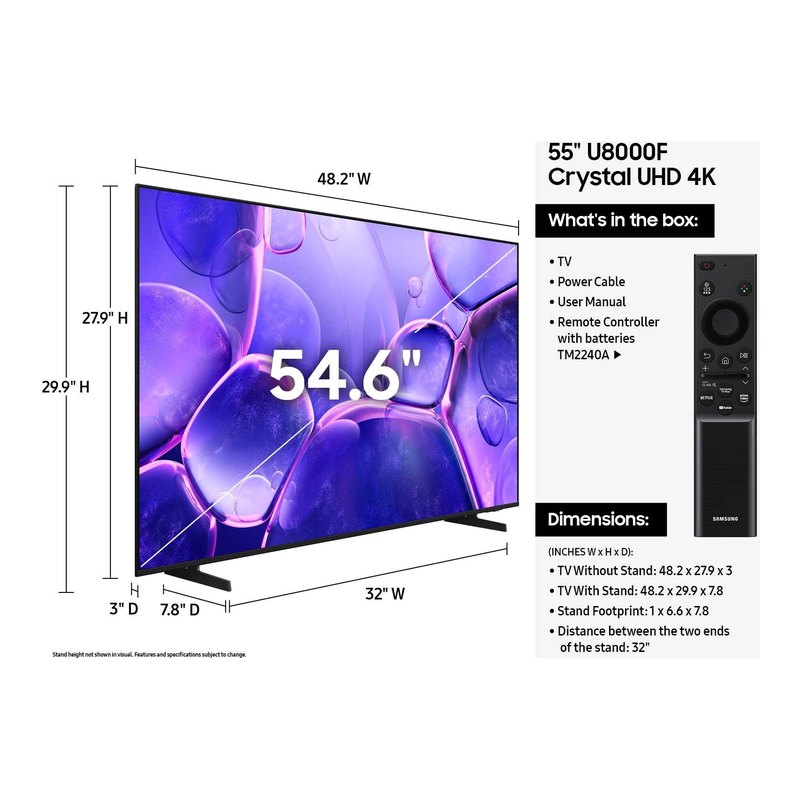
Samsung U8000F UN55U8000FFXZA
Performance7.9
Value8.7
Reliability7.7
Panel: LED (Crystal UHD)Refresh rate: 60HzHDR: HDR10+, HDR10, HLGSmart platform: TizenHDMI 2.1: None (3x HDMI 2.0)
The Samsung U8000F is the safe pick when you want a 55-inch 4K TV from a big brand for well under $400. The Crystal UHD processor upscales HD content to 4K cleanly, colors are pleasant out of the box, and the slim bezels look more expensive than the price suggests. It runs the same Tizen smart platform as Samsung's premium TVs, so you get every major app plus Samsung TV Plus with hundreds of free live channels.
This is a basic LED panel without local dimming, so contrast in a dark room is limited and HDR content does not have much punch, even though HDR10+ is supported. The panel runs at 60Hz, which is fine for casual console gaming but lacks 120Hz and VRR. With nearly ten thousand Amazon ratings, buyers consistently call it easy to set up and dependable. It is not the TV for movie nights in the main living room, but as a bedroom or kitchen TV it is excellent value.
Pros
- Low price from a major brand
- Tizen with Samsung TV Plus free channels
- Slim design and simple setup
Cons
- Limited HDR brightness
- No 120Hz or VRR
- Average contrast in a dark room
Ideal for: A second TV for a bedroom, dorm or guest room on a tight budget.
VerdictOur conclusion
The LG C5 is the best 55-inch TV for most people: perfect blacks, four HDMI 2.1 ports and a fast webOS system for around $1,100. The TCL QM6K is the best value, with Mini LED brightness and 144Hz gaming for well under $500. If you want the brightest, most refined OLED picture, the LG G5 is the premium pick. On a tight budget, the Samsung U8000F is a dependable 4K set for a bedroom or guest room.
View at Amazon →
Buying guide: how to choose the right 55-inch TVs
OLED, Mini LED or LED?
OLED pixels light themselves, so black is truly black and contrast is perfect. That is ideal for movies in a dim room. Mini LED uses thousands of tiny LEDs behind an LCD panel and gets much brighter, which helps in a sunny living room. QLED is an LED TV with a quantum dot layer for richer color. A standard LED TV is the cheapest option and fine for a bedroom or guest room.
Is 55 inches big enough?
For 4K, a 55-inch TV works best at a viewing distance of about 6.5 to 8 feet. If your couch is more than 9 feet from the screen, a 65-inch TV will feel more immersive. A 55-inch TV is roughly 48.5 inches wide, so measure your TV stand first, especially for models with feet at the far edges.
Dolby Vision or HDR10+?
HDR adds brighter highlights and more detail in dark areas. Netflix, Disney+ and Apple TV+ mostly use Dolby Vision, while Prime Video supports HDR10+ as well. LG and Sony support Dolby Vision only, Samsung supports HDR10+ only, and TCL, Hisense and Amazon support both. Brightness matters more than the format: a dim TV gets little out of HDR.
What gamers should look for
With a PS5, Xbox Series X or gaming PC, look for HDMI 2.1, a 120Hz or 144Hz refresh rate, VRR and ALLM. These keep gameplay smooth and responsive. Count your HDMI 2.1 ports: two consoles plus a soundbar on eARC can easily need three.
Smart TV platforms
Google TV (TCL, Hisense, Sony) has the largest app store and built-in Chromecast. LG uses webOS and Samsung uses Tizen, both fast and with all the big apps including Netflix, Max, Peacock and YouTube TV. Fire TV is best for Alexa users but shows more ads. If an app is missing or the TV gets slow, a $40 streaming stick fixes it.
Budget for sound
Thin TVs have little room for speakers, so dialogue can sound thin and explosions lack weight. A soundbar connected via HDMI eARC is the easiest upgrade, and models from around $200 make a clear difference. Check that the TV has an eARC port if you want Dolby Atmos from streaming apps.
Still deciding? We also compare TVs under $500 and 65-inch TVs.
Frequently asked questions
What is the best 55-inch TV in 2026?
Based on our comparison of specs, prices and buyer reviews, the LG C5 OLED55C5PUA is the best 55-inch TV for most people. It combines OLED contrast, four HDMI 2.1 ports up to 144Hz and the fast webOS system. The TCL QM6K is the best value.
How much should I spend on a 55-inch TV?
A good 55-inch TV costs between about $450 and $1,100 in 2026. Around $450 to $700 buys a bright Mini LED from TCL or Hisense, and OLEDs start around $800. Under $400 you get a basic 4K LED TV that suits a bedroom.
Is OLED good for a bright living room?
Modern OLEDs like the LG G5 get bright enough for most rooms. If your TV faces big windows with direct sun, a Mini LED like the Hisense U8 or TCL QM7K is the better choice because it gets much brighter.
Can an OLED TV get burn-in?
Burn-in is rare with normal use. Modern OLEDs shift the image slightly and refresh pixels automatically when the TV is off. The risk is higher if you leave a news channel with a static logo on for many hours every day.
How far should I sit from a 55-inch TV?
For a 55-inch 4K TV, about 6.5 to 8 feet is ideal. That is close enough to see the detail of 4K without seeing pixels. If you sit more than 9 feet away, consider a 65-inch model.
Which 55-inch TV is best for gaming?
The LG C5 and LG G5 are the best gaming TVs thanks to four HDMI 2.1 ports, VRR and 144Hz to 165Hz. On a budget, the TCL QM6K offers native 144Hz and VRR for under $500.